
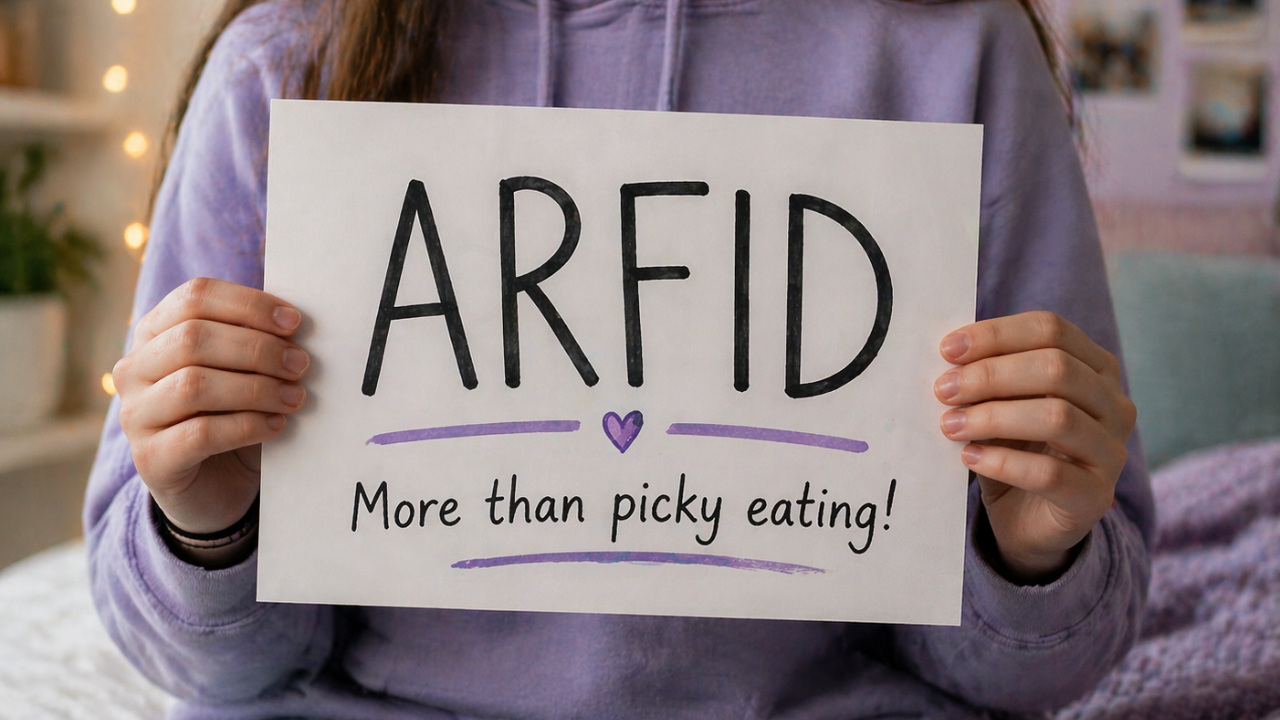
“It Feels Like Anxiety and Pressure” - A Conversation with a 14-Year-Old with ARFID
Sometimes the most powerful way to understand feeding challenges is to step back and listen. Young people offer a great deal of wisdom - we can learn so much from them.
Recently, I sat down with a 14-year-old that I’ve worked with for several years to talk about her experience with ARFID (Avoidant Restrictive Food Intake Disorder). With her and her family’s permission, I’m sharing parts of our conversation here.
I’ll call her Lia.
How would you explain ARFID to someone, in your own words?
Lia:
“Like being really sensitive to certain foods based on their features.”
What do you wish people understood about what it feels like to have eating challenges or food challenges?
Lia:
"I feel like it's important that they, actually know what ARFID is, because, sometimes, when foods are talked about, I feel like it's important for people to know that not everyone likes the same foods as others."
"And there are some things that people are struggling with food-wise and it's a bit odd to have other people talking about a bunch of foods they love, and then there are other people, like me, that don't eat those foods at all. And when they are talking about it and you're asked about it, it's kind of hard to answer."
Mom - "I'd like to jump in from a parent perspective."
"For me, the biggest challenge I had was trying to find foods that Lia would eat and I struggled with a family of five - making different meals to accommodate her eating challenges."
"The other thing was when we first started, I would force Lia to try and eat things, and it just ended up being a battle - whereas now I've learned she can explore things in different ways. It doesn't have to be to 'eat it and swallow it.' You taught us at the beginning about smelling it, just touching it with your tongue, and those small successes brought us to where we are now, where her repertoire has significantly increased."
What does it feel like when someone tells you to try something that you don't to eat?
Lia:
“It’s a lot of pressure…it feels like anxiety.”
“I don’t want to say yes to them… but I feel like I try hard to make myself try the food, but I usually end up saying no…and then I usually get a bad response from the person after.”
What was eating like when you were younger, compared to now?
Lia:
“When I was little, I wouldn’t try anything.”
“Now I’m more willing to try something way more than I was before."
What happens in your body and mind when trying a new food?
Lia:
“It can feel a bit scary…I used to just look at food and if it doesn't look good, I would say no. Now I focus more on the smell instead of the looks.”
Is there anything that's difficult when eating with friends or at school?
Lia:
“No, because I bring my own lunch.”
“Sometimes my friends have things that look good, so I ask what it is and write it down, then I go home and show my Mom my notebook and ask to try it."
What are you proud of yourself about?
Lia:
“That I’m eating more of everything.”
“And I’m more willing to try something than before.”
Are there any foods that feel like a "no way!" for you?
Lia:
“Meats…and seafood.”
“The texture is weird…it’s soft but hard at the same time.”
“For seafood…it’s the flavour and the feeling.”
If you could give advice to parents or to feeding therapists like me that are working with kids with ARFID, what would you tell them?
Lia:
“Don’t try and force them…encourage them in a way that makes them want to do it themselves.”
In your opinion, what should adults stop doing that doesn't help?
Lia:
“Say negative things if someone doesn't want to try something.”
“Don’t pressure them so much.”
What would you say to any other kid who feels like they're the only one struggling with food or ARFID?
Lia:
“They’re not by themselves…there are people out there that also struggle with it.”
“And if you’re really struggling…maybe you should ask for help, because people are willing to help you."
Is there anything I could do differently as a feeding therapist that you think might help you more?
Lia: "No, I think what you do is really good, because I like how you break up, like the foods into like steps, so I can kind of work my way there."
"And if I don't want to try something, you just, let me be, and you accept the fact that I don't want to. You support my opinion while also supporting yours."
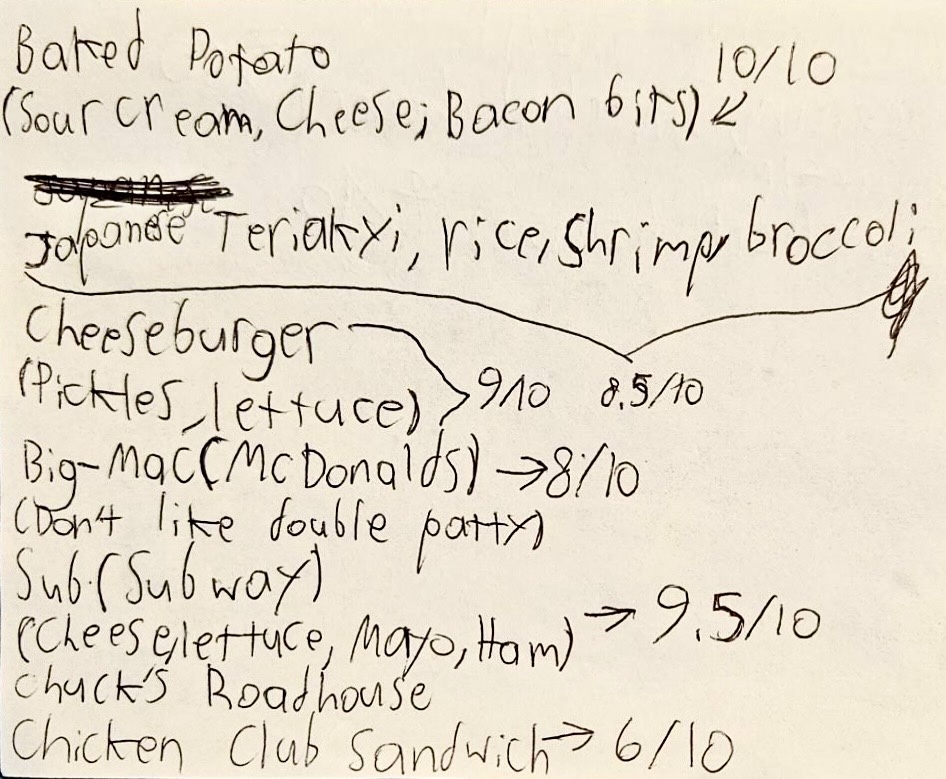
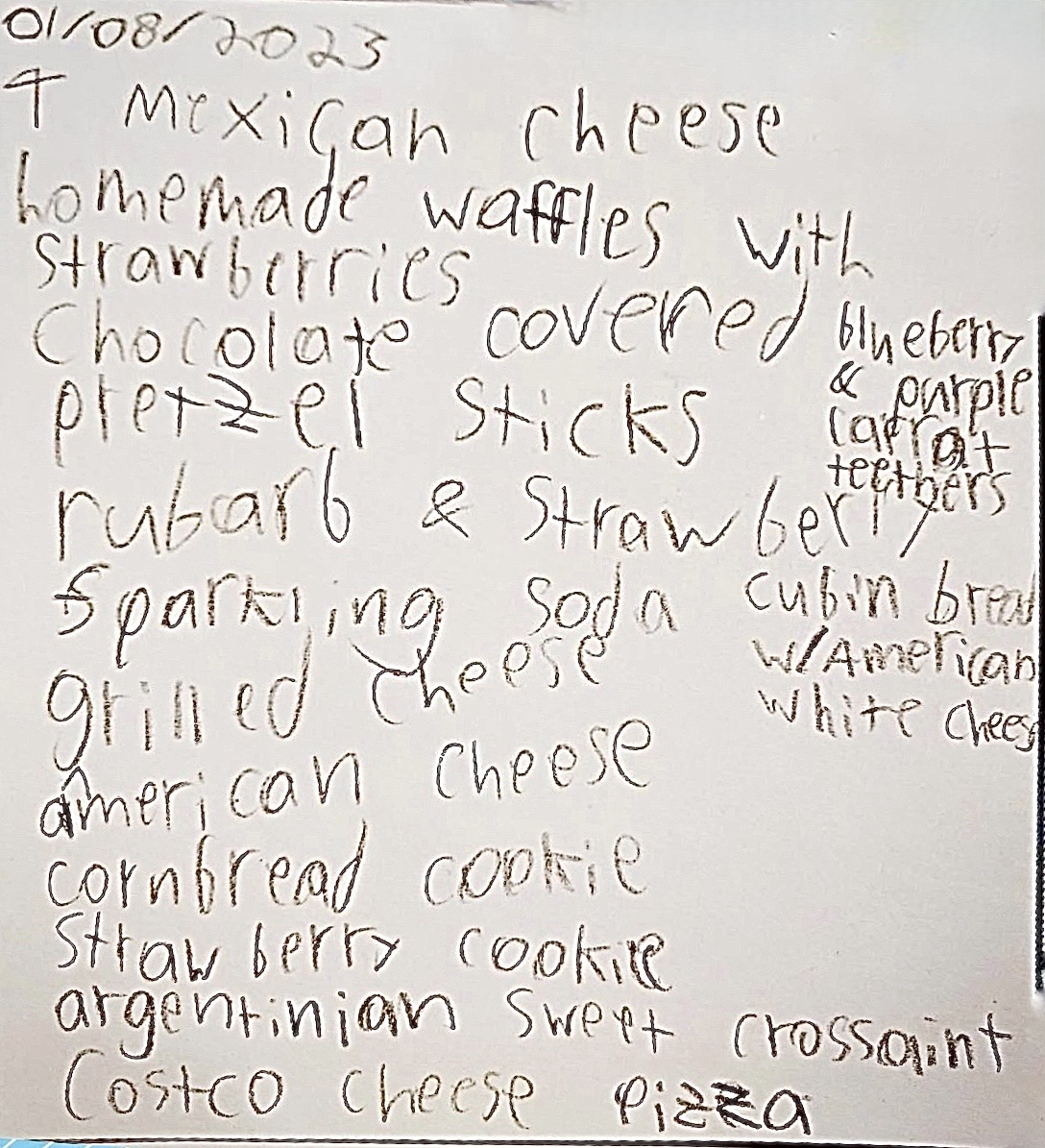
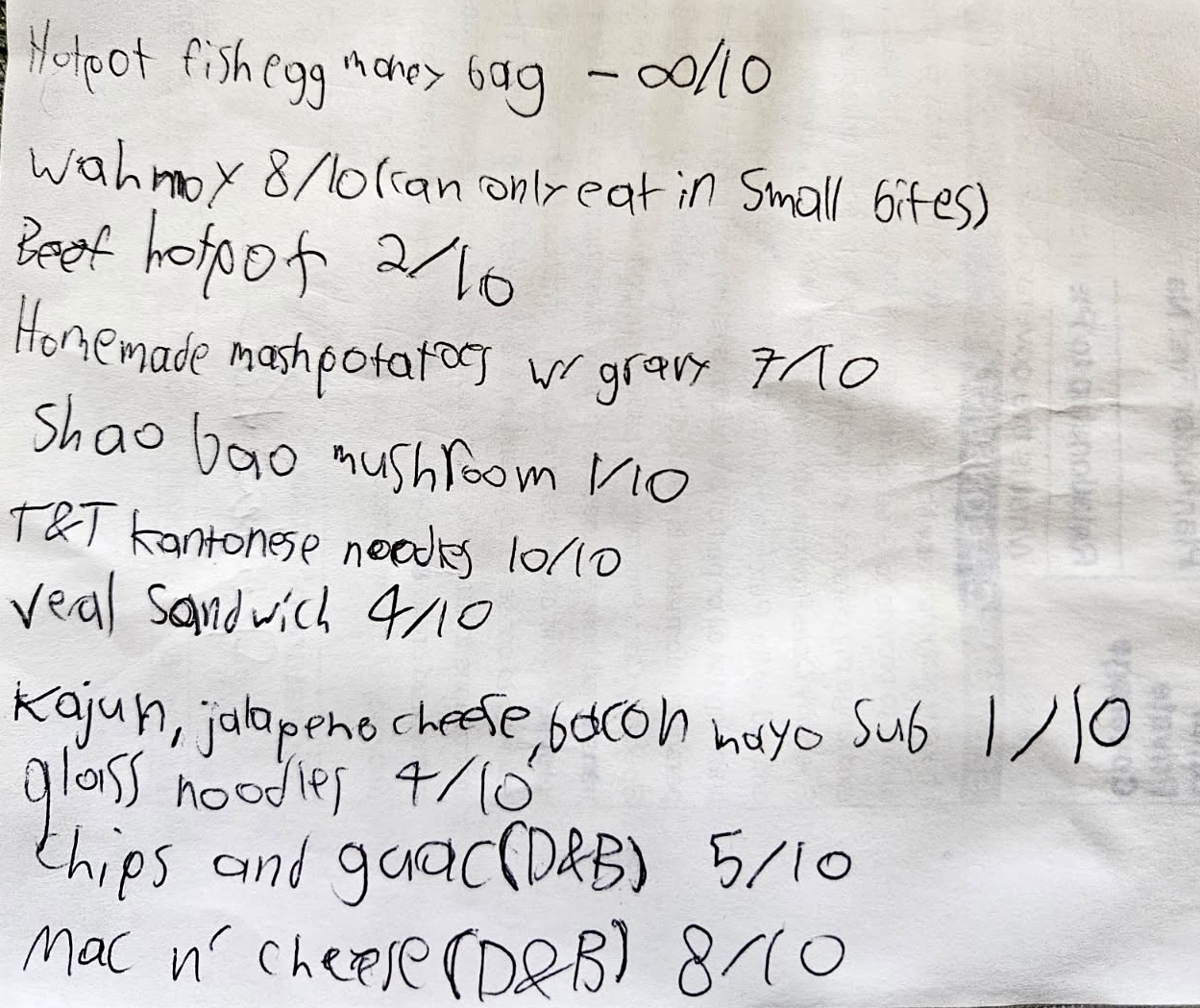
Here are a few of Lia's food lists that she proudly shares during our sessions. She enjoys tasting new foods between our visits and giving each one a score out of 10. With time, growing confidence, and the ability to make her own choices, Lia has become quite an adventurous eater!
A few reflections...food for thought.
There’s so much wisdom in what Lia shared.
ARFID isn’t about being “difficult.”
It’s about sensitivity, having anxious feelings, and the human need for bodily autonomy and safety. I often say, "You can lead a child to food, but you can't make them eat."
Progress doesn’t come from pressure.
It comes from curiosity, connection, love, support, and time.
And maybe most importantly - kids often know what they need.
It's so important that we listen.
Thank you to Lia and her family for allowing me to share this conversation. Your words will help more families than you know.
